20
Feb
2026
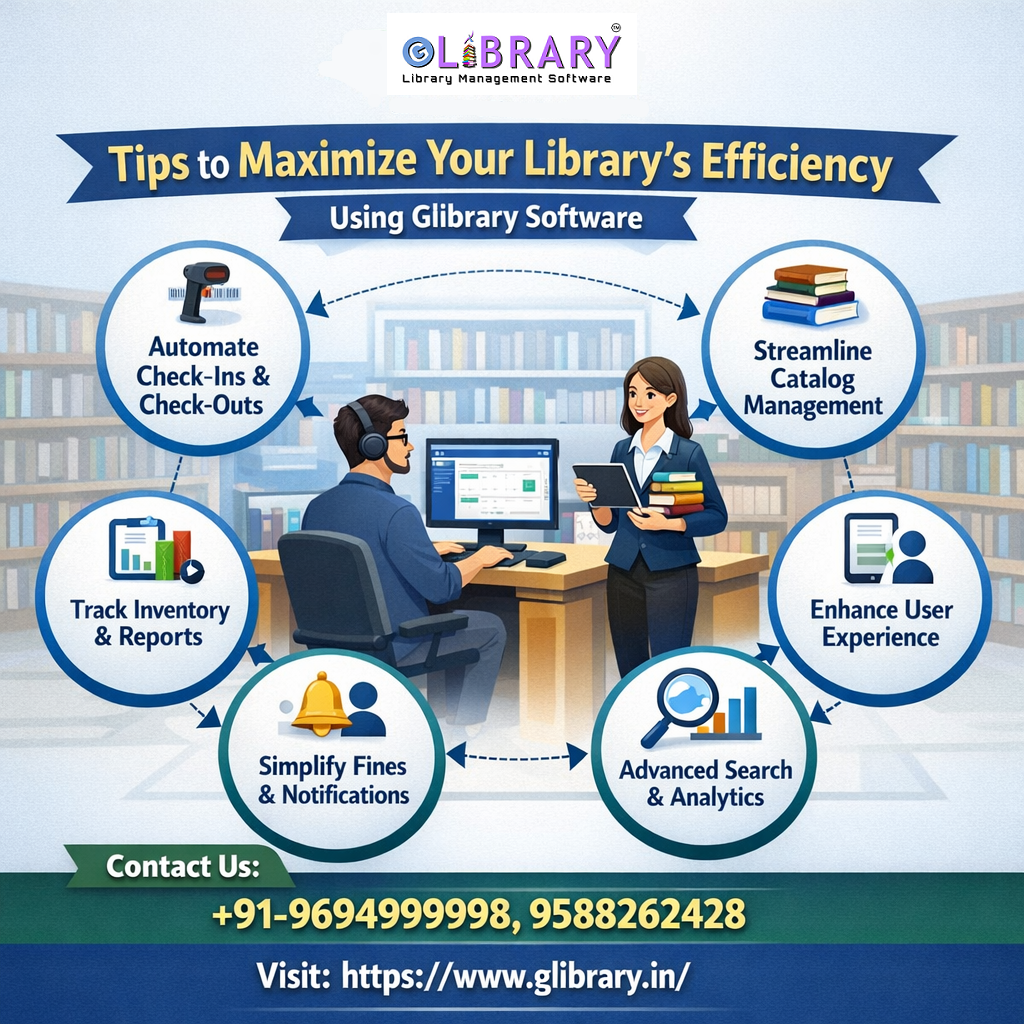
Tips to Maximize Your Library’s Efficiency Using Glibrary Library Management Software
In today’s digital age, libraries are no longer limited to shelves filled with books. Modern schools, colleges, and universities require streamlined systems that manage physical and digital resources efficiently. However, without proper tools, library administration can become time-consuming and stressful. This is where Glibrary Library Management Software plays a transformative role. Designed specifically for educational institutions, Glibrary helps automate routine tasks, improve accuracy, and enhance user experience. By implementing the right strategies, administrators can maximize their library’s efficiency and create a well-organized, productive learning environment. In this blog, we will explore practical tips to help you make the most of Glibrary Library Management Software and optimize your library operations.
Managing a school or college library efficiently requires organization, accuracy, and smart resource allocation. Traditional manual systems often lead to misplaced books, delayed returns, calculation errors in fines, and time-consuming administrative tasks. In today’s digital era, institutions need smarter solutions to keep up with growing academic demands. This is where Glibrary Library Management Software plays a crucial role. As a powerful and user-friendly Library Management Software, Glibrary helps schools and colleges streamline operations, reduce workload, and improve overall productivity. If you’re looking to maximize your library’s efficiency, here are practical tips on how to leverage Library Management System Software effectively.
1. Digitize and Organize Your Entire Book Inventory
One of the first steps to improving library efficiency is proper book cataloging. With Glibrary Library Management Software, administrators can easily digitize their entire collection.
Instead of maintaining manual registers, use Glibrary to:
- Categorize books by subject, author, genre, or ISBN
- Add detailed descriptions and metadata
- Track book availability in real-time
- Implement barcode or RFID integration
Organized digital records make searching and tracking books faster and more accurate. This reduces confusion, saves time, and enhances overall productivity.
2. Automate the Book Issue and Return Process
Manual issuing and returning of books often lead to delays and human errors. One of the biggest advantages of using Library Management System Software like Glibrary is automation.
With barcode or RFID scanning:
- Books can be issued within seconds
- Return entries are automatically recorded
- Due dates are tracked digitally
- Overdue records are easily accessible
Automation eliminates paperwork and ensures accuracy, significantly improving library efficiency.
3. Utilize Smart Member Management Features
Managing hundreds or thousands of students and faculty members manually can be overwhelming. Library Software for Schools like Glibrary allows administrators to maintain detailed member profiles digitally.
Make sure you:
- Register all members with accurate contact information
- Categorize users (students, teachers, staff)
- Track borrowing history
- Monitor active and expired memberships
Efficient member management reduces confusion and helps administrators stay organized at all times.
4. Enable Automated Alerts and Notifications
Timely communication is essential for smooth library operations. One of the best ways to maximize efficiency is by using automated alerts.
With Glibrary Library Management Software, you can:
- Send reminders for overdue books
- Notify members about upcoming due dates
- Alert users about new arrivals
- Inform members about membership renewals
Automated notifications reduce manual follow-ups and ensure better compliance from members.
5. Generate and Analyze Reports Regularly
Data-driven decision-making is crucial for improving library performance. Glibrary provides powerful reporting tools that help administrators analyze key metrics.
Use reports to:
- Identify most borrowed books
- Track overdue trends
- Monitor daily or monthly circulation
- Evaluate member activity
These insights help in planning future book purchases, improving resource allocation, and identifying operational gaps. A good Library Management Software should not only manage data but also help you use it effectively.
6. Implement Role-Based Access for Staff
In larger institutions, multiple staff members handle library operations. To ensure accountability and efficiency, use Glibrary’s role-based access feature.
You can:
- Assign specific roles to librarians and assistants
- Restrict access to sensitive data
- Monitor staff activity
This structured system prevents errors, improves transparency, and ensures smooth teamwork within the library.
7. Optimize Fine and Fee Management
Manual calculation of late fees can cause disputes and inaccuracies. Glibrary automates fine calculation based on predefined rules.
To maximize efficiency:
- Set clear fine policies in the system
- Enable automatic fine calculation
- Generate fine reports
- Track pending payments
This simplifies financial management and reduces administrative workload.
8. Promote Self-Service Through OPAC
A key feature of modern Library Management System Software is Online Public Access Catalog (OPAC). Glibrary allows students and faculty to search for books independently.
By encouraging self-service:
- Staff workload decreases
- Members find books quickly
- Waiting time is reduced
- Library experience improves
Self-service tools significantly enhance operational efficiency while empowering users.
9. Regularly Update and Maintain Data
Efficiency depends on accurate and updated information. Make it a practice to:
- Update new book entries immediately
- Remove damaged or outdated books from the system
- Verify member details periodically
- Backup digital data securely
Consistent data management ensures the system runs smoothly without confusion or errors.
10. Train Staff for Maximum Utilization
Even the best Glibrary Library Management Software can’t deliver full benefits without proper usage. Conduct regular training sessions for library staff to ensure they understand all features.
Encourage them to:
- Use advanced search filters
- Explore reporting tools
- Automate repetitive tasks
- Utilize barcode or RFID features effectively
Well-trained staff can unlock the full potential of your Library Software for Schools, ensuring maximum productivity.
11. Integrate with School or College Systems
For maximum efficiency, integrate Glibrary with your institution’s ERP or student management system. This ensures:
- Seamless data sharing
- Easy student verification
- Centralized administration
- Reduced duplication of work
Integrated systems save time and create a unified digital environment for administrators.
Why Glibrary is the Ideal Solution for Modern Libraries
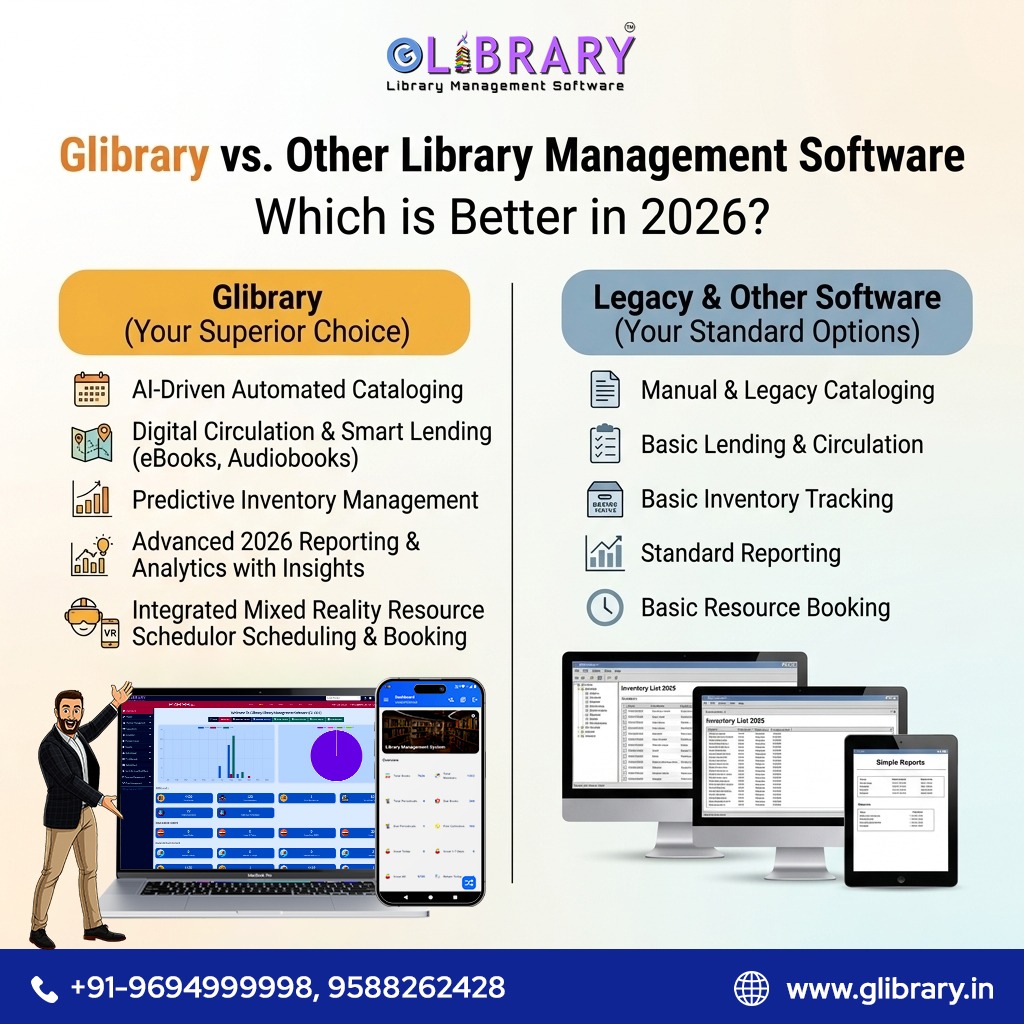
When it comes to choosing the right Library Management Software, Glibrary stands out due to its:
- User-friendly interface
- Comprehensive automation features
- Scalability for schools and colleges
- Advanced reporting capabilities
- Secure and reliable data management
Whether you manage a small school library or a large university collection, Glibrary Library Management Software provides all the tools needed to improve efficiency and reduce administrative stress.
Maximizing your library’s efficiency requires more than just organizing books—it demands smart automation, accurate tracking, and data-driven decision-making. By implementing the tips above and fully utilizing Glibrary Library Management Software, administrators can streamline operations, reduce workload, and create a better experience for students and staff. Investing in advanced Library Management System Software like Glibrary ensures smoother workflows, improved accuracy, and long-term success for educational institutions. In a world where digital transformation is reshaping education, choosing the right Library Software for Schools is no longer optional—it’s essential for building a modern, efficient, and stress-free library environment.