19
Nov
2026
How to Set Study Library Fees for Full-Day, Half-Day and Hourly Plans
Running a study library or reading room requires careful planning, especially when it comes to setting membership fees. Students have different study schedules, availability, and budgets. Some prefer studying throughout the day, while others need only a few hours or a specific shift. Therefore, offering flexible membership plans can help study library owners attract more students, improve seat utilization, and increase revenue.
Setting the right fees is not simply about deciding how much to charge. Library owners must consider operating costs, seating capacity, electricity consumption, facilities, location, and local competition. A well-planned pricing structure helps maintain profitability while providing affordable options for students.
In this guide, we will explain how to set suitable fees for full-day, half-day, and hourly memberships in study libraries and reading rooms.
1. Understand Your Library's Operating Costs
Before deciding membership prices, calculate your monthly operating expenses. This will help you determine the minimum revenue required to run your study library successfully.
Some common expenses include:
- Monthly rent or building maintenance.
- Electricity and air-conditioning bills.
- Internet charges.
- Staff salaries.
- Furniture and seating arrangements.
- Cleaning and housekeeping.
- Drinking water and other facilities.
- Equipment maintenance and miscellaneous expenses.
For example, if your monthly operating expenses are ₹60,000, your library must generate enough revenue to cover these costs and provide a reasonable profit.
Understanding your expenses is the first step toward creating a sustainable pricing strategy.
2. Decide Your Library's Seating Capacity
Your seating capacity directly affects your earning potential. Before creating membership plans, calculate how many students your reading room can accommodate comfortably.
For example, consider a study library with 50 seats. If every seat is occupied by a full-day member, the maximum number of active memberships will be limited to 50.
However, offering different shifts allows you to utilize the same seats for multiple students throughout the day.
For example:
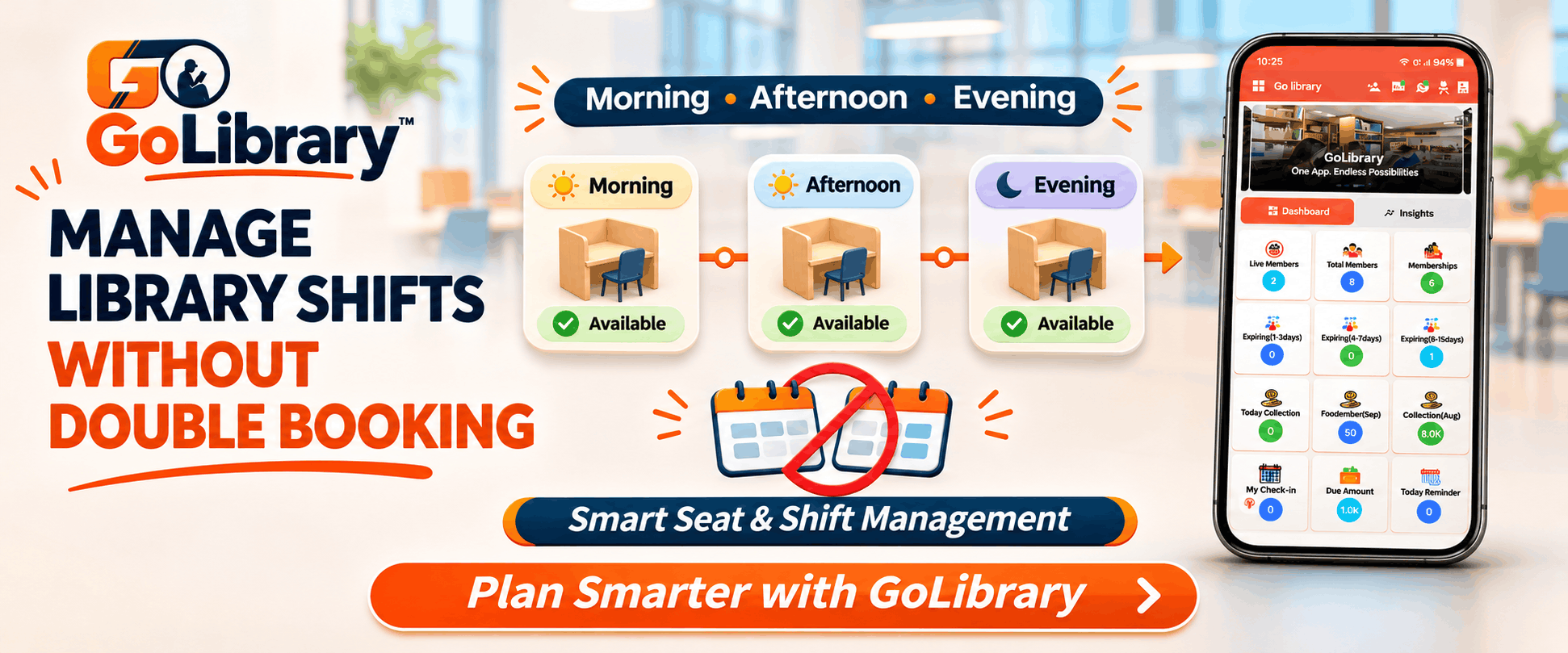
- Morning shift: 6 AM to 12 PM.
- Afternoon shift: 12 PM to 6 PM.
- Evening shift: 6 PM to 12 AM.
- Full-day access: 6 AM to 12 AM.
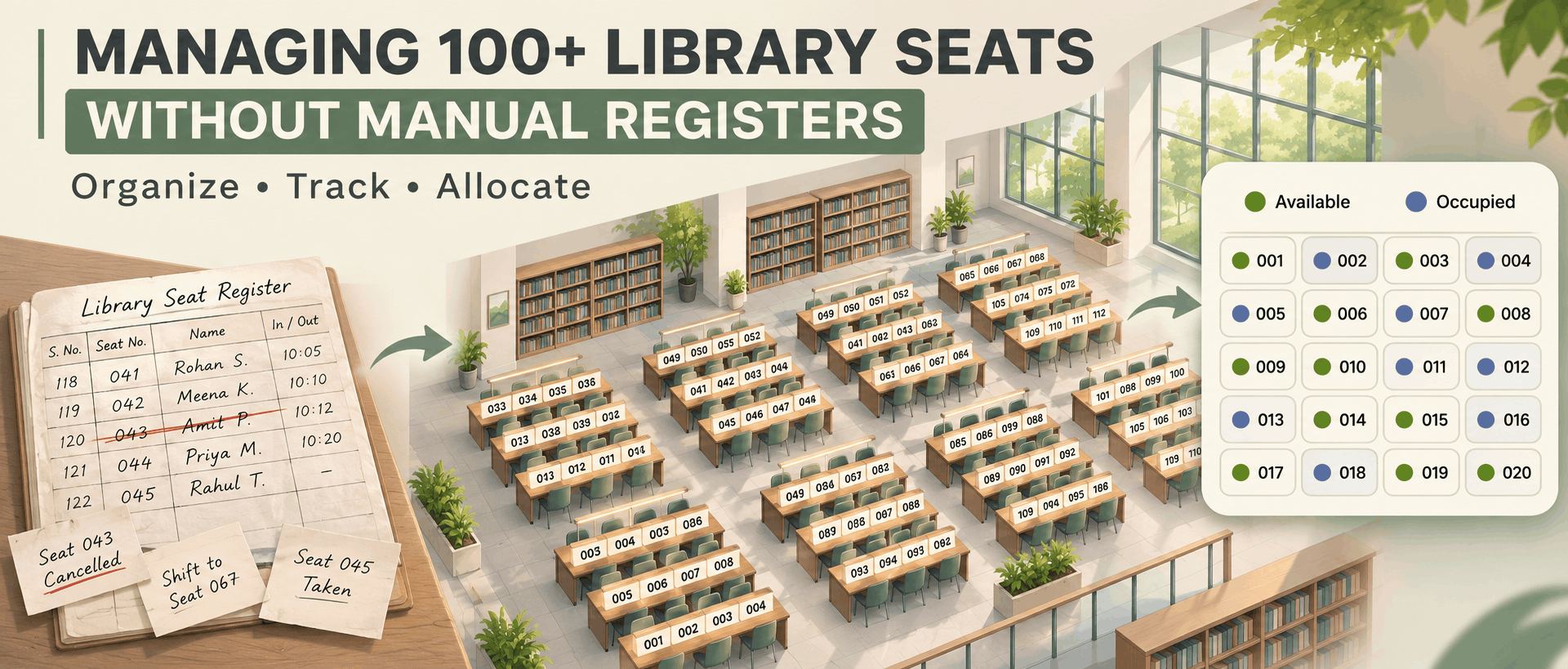
A properly planned seat allocation system helps prevent scheduling conflicts and makes better use of available space.
A Seat Management App or Seat Manager App can also help owners monitor occupied seats, available seats, and student allocations more conveniently.
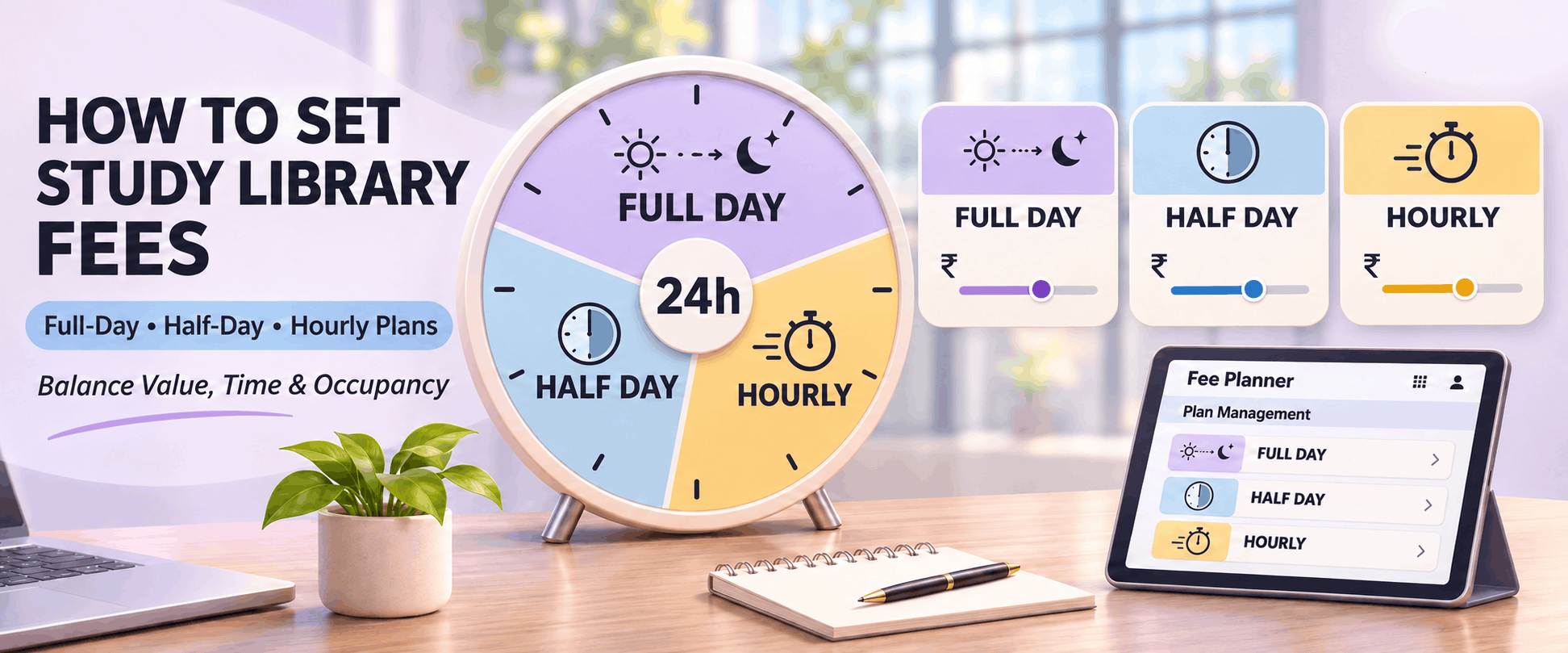
3. How to Set Full-Day Membership Fees
Full-day membership is suitable for students who spend most of their study time at the library. Competitive exam aspirants and students preparing for government examinations often prefer this option. Since full-day members occupy seats for longer periods, the pricing should reflect the additional usage of library facilities.
Consider the following factors:
- Total operating hours.
- Availability of air conditioning.
- Personal desk or dedicated seating.
- Electricity and lighting expenses.
- Drinking water and other facilities.
- Location and competition.
Example pricing structure:
| Membership duration | Suggested fee |
|---|---|
| 1 Month | ₹1,500 |
| 3 Months | ₹4,200 |
| 6 Months | ₹8,000 |
| 12 Months | ₹15,000 |
These are illustrative prices. Actual fees should be adjusted according to your location, facilities, operating expenses, and target students.
Offering longer-duration memberships at slightly discounted rates can encourage students to choose extended plans and improve revenue predictability.
4. How to Set Half-Day Membership Fees
Half-day memberships are ideal for students who cannot spend an entire day in the library.
For example, some students attend coaching classes in the morning and prefer studying in the afternoon or evening. Others may have college schedules and need a dedicated study space for a limited period.
You can divide half-day memberships into two or more shifts.
Example shift structure:
- Morning: 6 AM to 12 PM.
- Afternoon: 12 PM to 6 PM.
- Evening: 6 PM to 12 AM.
Example pricing structure:
| Membership duration | Suggested fee |
|---|---|
| 1 Month | ₹900 |
| 3 Months | ₹2,500 |
| 6 Months | ₹4,800 |
| 12 Months | ₹9,000 |
Half-day fees are generally lower than full-day fees because students have access to the facilities for fewer hours.
However, avoid setting the prices too low. Your pricing should cover operating expenses while ensuring that each shift remains profitable.
5. How to Set Hourly Membership Fees
Hourly memberships are useful for students who need a quiet study environment for a short period.
This option is particularly suitable for:
- Students attending nearby coaching classes.
- Students preparing for upcoming examinations.
- Individuals requiring occasional study space.
- Students who cannot commit to monthly memberships.
Example hourly pricing structure:
| Usage duration | Suggested fee |
|---|---|
| 1 Hour | ₹30 |
| 2 Hours | ₹50 |
| 3 Hours | ₹70 |
| 5 Hours | ₹100 |
Hourly pricing provides flexibility, but library owners should establish clear entry and exit rules.
It is also important to monitor hourly seat availability to ensure that existing full-day and half-day members are not affected.
6. Compare Membership Plans Before Finalizing Prices
Offering multiple membership options allows students to select a plan according to their requirements.
Here is an illustrative comparison:
| Plan | Access duration | Monthly fee |
|---|---|---|
| Full-Day | 12–18 hours | ₹1,500 |
| Half-Day | 6 hours | ₹900 |
| Hourly | Pay per hour | ₹30/hour |
The actual access hours and fees will depend on your library's operating schedule and local market conditions.
A clear pricing structure reduces confusion and helps students make informed decisions.
7. Consider Location and Competitor Pricing
Your library's location plays an important role in determining membership fees.
A study library near coaching institutes, universities, or student residential areas may have different pricing opportunities compared with one in a less populated location.
Research nearby reading rooms and compare:
- Monthly membership charges.
- Full-day and half-day pricing.
- Available facilities.
- Air-conditioning availability.
- Seating comfort.
- Operating hours.
- Additional services.
However, do not copy competitor pricing blindly. Your fees should reflect the value and facilities your library provides.
8. Use Digital Tools to Manage Fees and Seat Allocation
As the number of students increases, managing memberships and payments manually becomes difficult.
A Library Management Application can help organize student information, membership plans, payment records, and renewal dates.
A Library Manager App can make it easier to access important information and monitor daily activities.
Depending on the available features, a Library Management Web Application or Library Management Mobile Application can help administrators manage library operations digitally.
An Automated Library Management Application may also simplify routine administrative activities such as:
- Recording membership payments.
- Tracking pending fees.
- Monitoring membership expiry.
- Managing different shifts.
- Allocating seats.
- Generating collection reports.
A Modern Library Management Application with seat and membership management features can reduce manual record-keeping and help administrators maintain better control over daily operations.
The objective is to make library administration more organized without unnecessarily increasing operational complexity.
9. Review Your Pricing Regularly
Membership pricing should not remain unchanged forever. Operating expenses, electricity rates, rent, and local competition may change over time. Review your pricing every six to twelve months.
Consider increasing fees when operating expenses rise, introducing special plans during examination seasons, or offering longer-duration membership discounts. However, communicate any fee changes clearly to existing members and provide reasonable notice.
Setting the right fees for full-day, half-day, and hourly memberships is essential for running a profitable study library or reading room. A balanced pricing strategy should consider operating expenses, seating capacity, student requirements, local competition, and available facilities. Offering flexible membership plans helps attract students with different schedules and budgets. At the same time, using a suitable Library Administration Application, Seat Management App, or Library Management App can make fee tracking, membership management, and seat allocation more organized.
With proper planning, transparent pricing, and efficient administration, study library owners can improve seat utilization, maintain steady revenue, and provide students with a comfortable and affordable study environment.