18
May
2026
Step-by-Step Guide to Using Glibrary Library Management Software
Managing a library manually can be difficult, especially for schools, colleges, universities, and institutions handling thousands of books and members. Traditional systems often lead to misplaced records, time-consuming processes, and errors in tracking books and users. This is why many institutions are now switching to digital solutions like Glibrary Library Management Software. A modern Library Management Software helps librarians automate daily operations such as book cataloging, issuing, returning, member management, reporting, routine tasks, reduce paperwork, improve accuracy, and provide better services to students and readers. Whether you are running a school library or a college library, learning how to use a proper Library Management System Software can improve efficiency and save valuable time. In this blog, we will provide a complete step-by-step guide to using Glibrary Library Management Software and explain how it simplifies library management.
What is Glibrary Library Management Software?
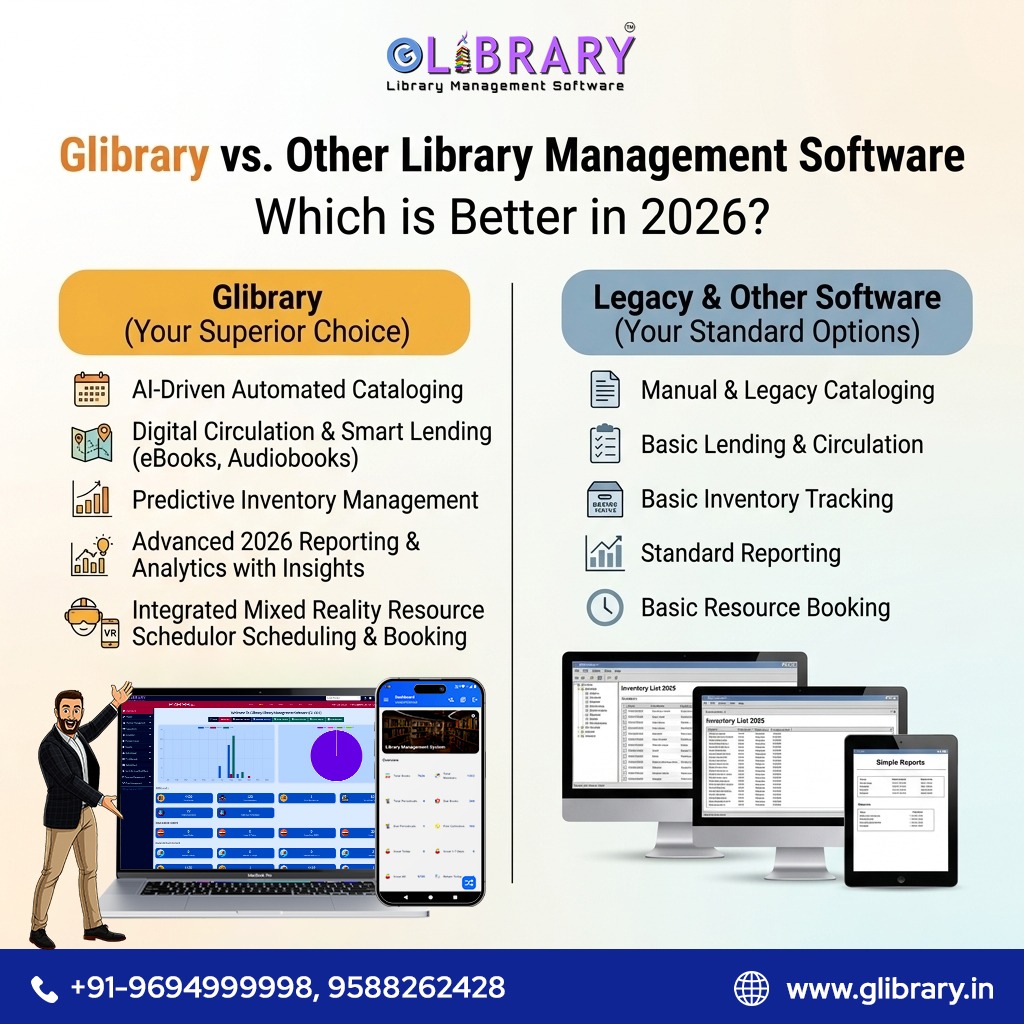
Glibrary Library Management Software is a digital solution designed to automate and simplify all library operations. It helps manage books, members, issue-return records, due reminders, reports, and much more from a single platform.
This advanced Library Management Software is suitable for:
- Schools
- Colleges
- Universities
- Coaching institutes
- Public libraries
With features like barcode integration, member management, automated alerts, and reporting, Glibrary helps libraries become faster, smarter, and more organized.
Why Use Library Management Software?
Traditional library systems involve manual entries, paper records, and time-consuming processes. These methods can lead to:
- Incorrect records
- Lost books
- Delayed book returns
- Poor inventory management
- Long queues at the issue counter
Using Library Software for Schools and colleges solves these problems by automating daily operations.
Benefits include:
- Faster book issuing and returning
- Easy member management
- Real-time book tracking
- Alerts and due reminders
- Better reporting and analytics
Step-by-Step Guide to Using Glibrary Library Management Software
Step 1: Install and Set Up the Software
The first step is installing Glibrary Library Management Software on your system or accessing the cloud-based platform.
During setup, you will configure:
- Library name
- Logo
- Contact details
- Library timings
- User roles and permissions
This creates the basic structure of your library system.
Step 2: Add Library Categories and Sections
Before adding books, organize your library into categories and sections.
Examples include:
- Fiction
- Science
- Mathematics
- History
- Technology
- Journals and magazines
A proper structure makes searching and inventory management easier.
Using Library Management System Software, librarians can organize books efficiently for quick access.
Step 3: Add Books to the System
Now begin entering books into the software database.
Details typically include:
- Book title
- Author name
- Publisher
- ISBN number
- Category
- Shelf location
- Quantity available
Many libraries also use barcode integration for faster management.
With Glibrary Library Management Software, librarians can import large numbers of books quickly and accurately.
Step 4: Generate Barcode Labels
Barcode support is one of the most important features of modern Library Management Software.
Each book receives a unique barcode that helps with:
- Faster book issuing
- Quick returns
- Inventory tracking
- Reduced manual errors
After generating barcode labels, attach them to books for seamless scanning.
Step 5: Register Members
The next step is member registration.
Libraries can add:
- Students
- Teachers
- Staff members
- External readers
Details stored may include:
- Name
- Contact information
- Membership ID
- Department or class
- Membership validity
This feature makes Library Software for Schools highly organized and efficient.
Step 6: Configure Membership Plans and Rules
Different libraries have different borrowing rules.
For example:
- Students may borrow 2 books for 14 days
- Teachers may borrow 5 books for 30 days
With Library Management System Software, librarians can configure:
- Borrowing limits
- Membership duration
- Fine amounts
- Renewal policies
This ensures proper control and smooth library operations.
Step 7: Issue Books to Members
Book issuing becomes very easy with Glibrary Library Management Software.
To issue a book:
- Scan the member ID or search the member profile
- Scan the book barcode
- Confirm issue date and return date
The system automatically updates records in real time.
Benefits include:
- Faster transactions
- Reduced queues
- Accurate records
- Better tracking
Step 8: Manage Book Returns
Returning books is equally simple.
The librarian only needs to scan the book barcode. The software automatically:
- Updates inventory
- Removes issue records
- Calculates overdue fines (if any)
This saves time and improves accuracy.
Step 9: Enable Alerts and Due Reminders
One of the best features of Glibrary Library Management Software is automated notifications.
The software can send alerts for:
- Due date reminders
- Overdue books
- Fine notifications
- Membership expiry reminders
- Reserved book availability
These alerts improve communication and encourage timely returns.
Step 10: Manage Reservations and Book Requests
Students often want books that are already issued.
Using Library Management Software, users can:
- Reserve unavailable books
- Get notified when books return
- Submit book requests online
This improves the overall library experience.
Step 11: Perform Inventory Management
Inventory management becomes much easier with digital systems.
Using barcode scanning and tracking, librarians can:
- Verify stock quickly
- Identify missing books
- Track damaged books
- Monitor book movement
This helps maintain a well-organized library.
Step 12: Generate Reports and Analytics
Reports are essential for library administration.
Glibrary Library Management Software can generate reports such as:
- Most issued books
- Active members
- Fine collection reports
- Daily issue-return statistics
- Inventory reports
These insights help libraries improve decision-making and resource planning.
Step 13: Use OPAC for Online Book Search
OPAC (Online Public Access Catalog) allows users to search for books online.
Students can:
- Search by title or author
- Check availability
- Reserve books
This feature enhances convenience and accessibility.
Step 14: Manage Multiple Users and Branches
Large institutions often have multiple librarians or branches.
Library Management System Software supports:
- Multi-user login
- Role-based access
- Multi-branch library management
This makes administration smoother and more secure.
Tips for Effective Use of Glibrary Software
Train Library Staff
Ensure librarians understand:
- Barcode scanning
- Member management
- Reporting tools
- Alerts and notifications
Proper training improves productivity.
Keep Records Updated
Regularly update:
- Book inventory
- Member information
- Membership renewals
Accurate data improves reporting quality.
Use Reports for Better Planning
Analyze reports regularly to:
- Identify popular books
- Plan new purchases
- Improve resource allocation
This helps libraries operate more effectively.
Backup Data Regularly
Although Glibrary stores data securely, regular backups are always recommended to avoid accidental loss
Why Choose Glibrary Library Management Software?
There are many reasons why schools and colleges prefer Glibrary Library Management Software:
- User-friendly interface
- Barcode and RFID support
- Automated alerts and reminders
- Real-time inventory tracking
- Advanced reporting tools
- Secure data management
- Multi-user and multi-branch support
As a complete Library Software for Schools and colleges, Glibrary helps modernize library operations and improve efficiency.
Future of Library Management Systems
Library technology continues to evolve rapidly.
Future advancements may include:
- Cloud-based access
- AI-powered search recommendations
- Mobile library apps
- Digital e-book integration
- Smart analytics
Libraries adopting modern Library Management Software today will be ready for future innovations.
Managing a library manually can be stressful and inefficient. By implementing Glibrary Library Management Software, schools and colleges can automate daily operations, reduce errors, and improve user experience. From book cataloging and barcode scanning to alerts and reporting, every feature is designed to simplify library management. A modern Library Management System Software not only saves time but also helps libraries become more organized, efficient, and future-ready. If you want to improve your library operations and deliver better services, investing in a reliable Library Software for Schools, colleges, and institutions like Glibrary is the perfect choice.