20
Nov
2026
How to Increase Study Library Revenue With Better Seat and Shift Planning
Running a study library or reading room is not just about providing students with a peaceful environment for studying. It is also about managing available space, maximizing seat occupancy, organizing membership plans, and generating consistent revenue. Many study library owners have sufficient seating capacity but still struggle to increase their income because of poor seat allocation and inefficient shift planning.
One of the most effective ways to improve profitability is to make better use of existing seats. By introducing flexible membership plans, organizing multiple shifts, tracking seat availability, and using digital tools, library owners can increase revenue without necessarily investing in additional space.
A well-organized Library Management Application can also help automate daily operations, maintain student records, and simplify seat allocation. Let's explore some practical strategies to increase study library revenue through better seat and shift planning.
1. Understand Your Library's Seating Capacity
The first step towards increasing revenue is understanding how many students your library can accommodate.
For example, if your reading room has 100 seats but only 65 students are enrolled, 35 seats remain unused. These vacant seats represent an opportunity to generate additional income.
Start by evaluating:
- Total available seats.
- Currently occupied seats.
- Vacant and reserved seats.
- Peak and low-demand hours.
- Student preferences for different shifts.
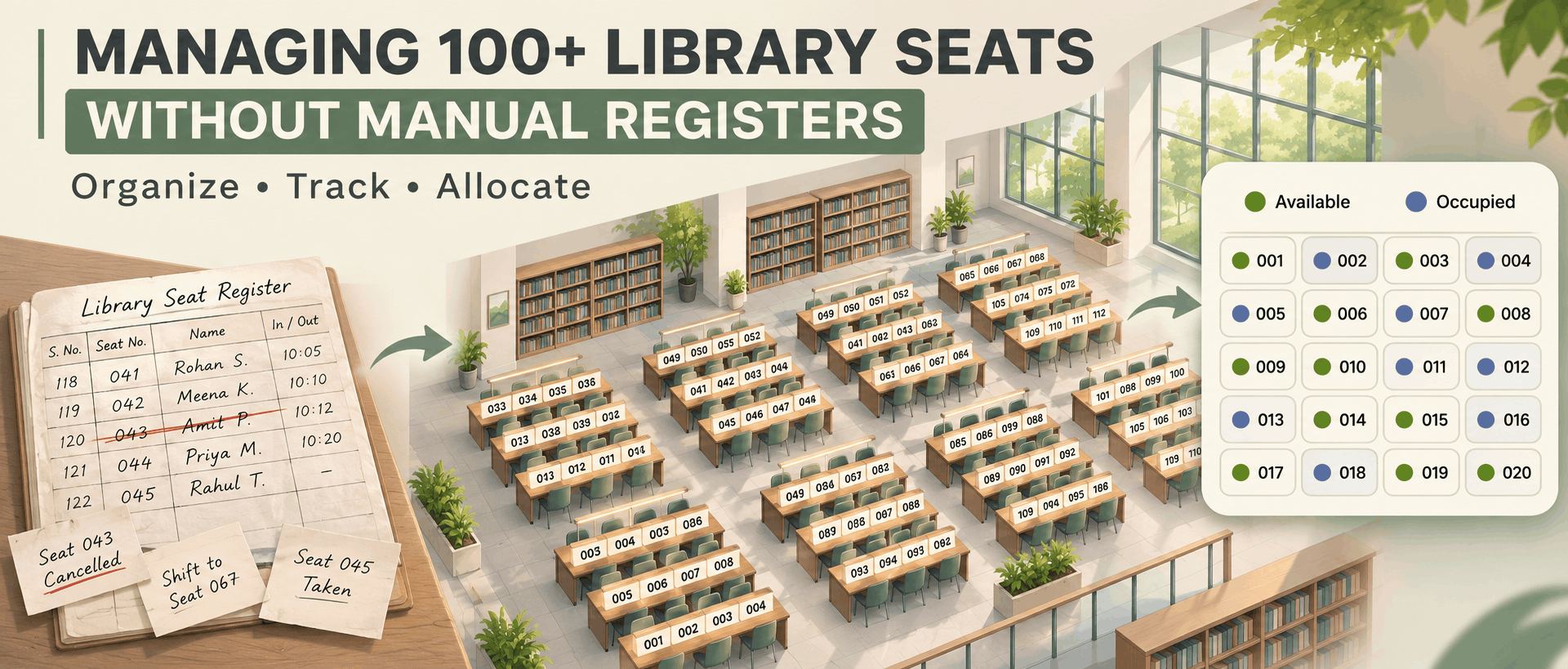
A Seat Management App can help maintain accurate seat records and make it easier to identify unused capacity. Instead of checking registers manually, owners can monitor seat availability and make better allocation decisions.
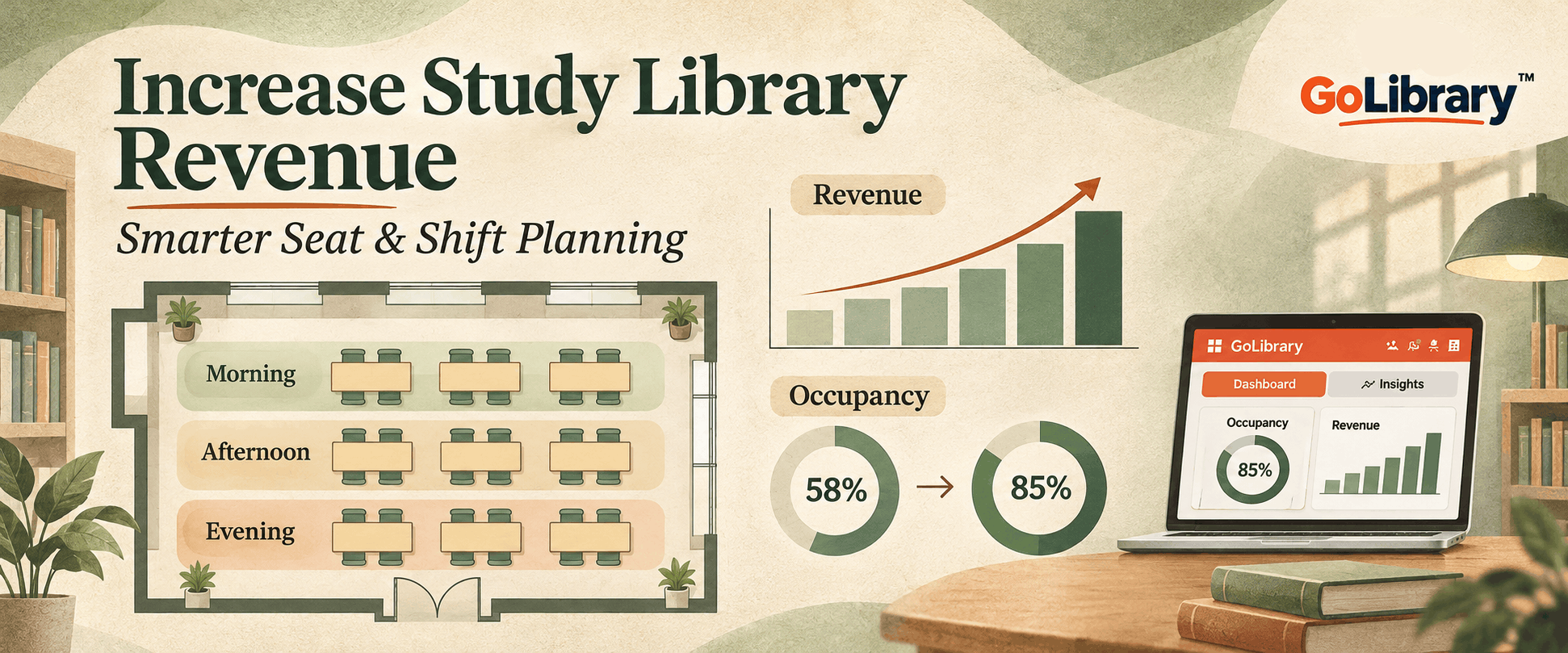
2. Introduce Multiple Shifts to Maximize Seat Utilization
One of the biggest revenue opportunities for study libraries comes from introducing multiple shifts.
Instead of assigning one seat to a single student for the entire day, library owners can offer different time-based memberships.
For example:
- Morning Shift: 6 AM – 12 PM
- Afternoon Shift: 12 PM – 6 PM
- Evening Shift: 6 PM – 12 AM
- Full-Day Membership: 6 AM – 12 AM
These timings are illustrative and can be adjusted according to the library's operating hours and student demand.
Suppose a study library has 100 seats and offers three separate six-hour shifts. If all shifts are fully occupied, the library can serve up to 300 student memberships using the same 100 seats.
This approach increases the earning potential of existing infrastructure without requiring additional seating space.
A Seat Manager App can help organize shift-wise seat allocations and reduce the chances of assigning the same seat to students with overlapping schedules.
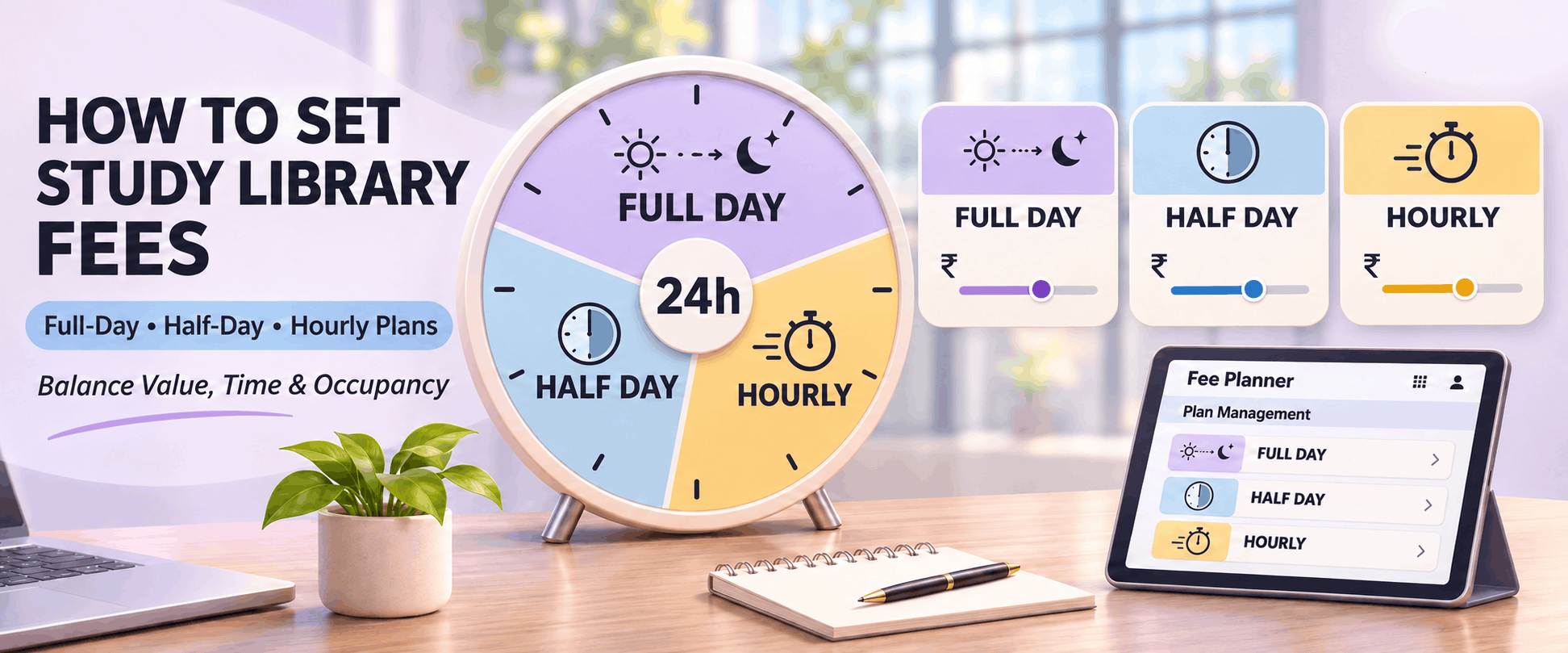
3. Create Flexible Membership Plans
Not every student has the same study routine. Some prefer morning hours, while others need evening or full-day access.
Offering different membership options allows library owners to attract students with different schedules and budgets.
Consider introducing plans such as:
- Morning-only membership.
- Evening-only membership.
- Afternoon membership.
- Full-day membership.
Short-duration or hourly plans, where operationally suitable.
For example, students preparing for competitive examinations may prefer longer study hours, while college students may need only evening access.
A flexible membership structure makes your reading room accessible to more students and helps improve seat occupancy.
Using a Library Manager App can simplify the process of creating membership records, assigning plans, tracking expiry dates, and managing renewals.
4. Use Different Pricing Strategies for Different Shifts
Charging the same fee for every shift may not always be the best pricing strategy.
Some time slots may have higher demand than others. For example, morning and evening shifts may be more popular because of students' daily schedules.
Library owners can consider demand-based pricing to improve revenue.
For example:
| Membership Plan | Illustrative Monthly Fee |
|---|---|
| Morning Shift | ₹700 |
| Afternoon Shift | ₹600 |
| Evening Shift | ₹750 |
| Full-Day Membership | ₹1,200 |
These are sample prices, not fixed market rates. Actual pricing should depend on location, facilities, competition, and operating costs.
A well-planned pricing structure helps attract students while ensuring that the library earns appropriately from its available seating capacity.
5. Reduce Vacant Seats Through Better Membership Management
Empty seats directly affect the revenue potential of a study library.
Sometimes seats remain vacant because owners do not maintain updated membership records or fail to follow up with students whose memberships have expired.
To reduce this problem:
- Track active and expired memberships.
- Monitor vacant seats regularly.
- Contact students before membership expiry.
- Maintain a waiting list for popular shifts.
- Reallocate seats when memberships end.
- Promote available seats to interested students.
A Library Management App makes it easier to maintain student information and monitor membership status.
With accurate records, library owners can identify vacant seats quickly and make them available to new students.
6. Introduce Advance Seat Booking and Reservation
Many students prefer selecting their seats before joining a study library. Allowing advance seat reservations can make the admission process more organized.
For example, students may want a particular seat near a window, away from distractions, or in a preferred section.
A digital reservation system can help owners manage these requests while avoiding duplicate seat allocations.
A Library Management Web Application can provide a centralized view of seat availability, reservations, and student allocations. Similarly, a Library Management Mobile Application can make it more convenient to access relevant information while away from the library.
However, reservation policies should be clearly defined to prevent seats from remaining blocked without confirmed memberships or payments.
7. Monitor Attendance and Identify Usage Patterns
Membership registrations alone do not provide a complete picture of library performance.
Owners should also understand how frequently students use their memberships and which shifts receive the most demand.
Attendance records can help answer questions such as:
- Which shift has the highest attendance?
- Which time slots have frequent vacancies?
- How many students regularly use their memberships?
- Which shifts have lower utilization?
- When should additional seats or shifts be introduced?
An Automated Library Management Application can help maintain digital attendance records and generate reports for better planning.
These insights allow owners to adjust shift timings, improve seat distribution, and make more informed business decisions.
8. Use Technology to Simplify Daily Administration
Managing multiple shifts, hundreds of students, fee payments, and seat allocations manually can become complicated.
A Modern Library Management Application helps bring important administrative activities together.
A suitable Library Administration Application can help with:
- Student registration and membership management.
- Seat allocation and availability tracking.
- Shift and membership plan management.
- Fee collection and payment records.
- Attendance monitoring.
- Membership expiry reminders.
- Income and expense reporting.
By reducing repetitive administrative work, owners can spend more time improving library facilities, attracting new members, and planning business growth.
9. Calculate Revenue Potential Before Expanding
Before renting additional space or purchasing more furniture, calculate how effectively your existing seats are being utilized.
For example, consider a library with 100 seats, three shifts, and an average monthly fee of ₹700 per membership.
If all 300 available shift memberships are occupied:
Potential Monthly Membership Revenue = 300 × ₹700 = ₹2,10,000
This is an illustrative calculation based on full occupancy. Actual revenue will depend on membership pricing, operational expenses, vacancies, and the number of active memberships. A Library Manager App or Library Management Web Application can help maintain the records required to monitor these figures and evaluate business performance.
Increasing study library revenue does not always require expanding your premises or investing in more furniture. Better seat utilization, flexible membership plans, organized shift scheduling, and effective student management can significantly improve the earning potential of an existing reading room. By identifying vacant seats, introducing suitable shifts, adjusting membership pricing, and monitoring attendance, library owners can make better use of their available resources.
Adopting a reliable Library Management Application or Seat Management App can further simplify these activities by providing organized digital records, efficient seat allocation, and useful business reports. Ultimately, the key to running a profitable study library is simple: maximize seat utilization, plan shifts according to student demand, and manage daily operations efficiently.